Estimated Last Free Day (LFD)
Last updated: September 9, 2026
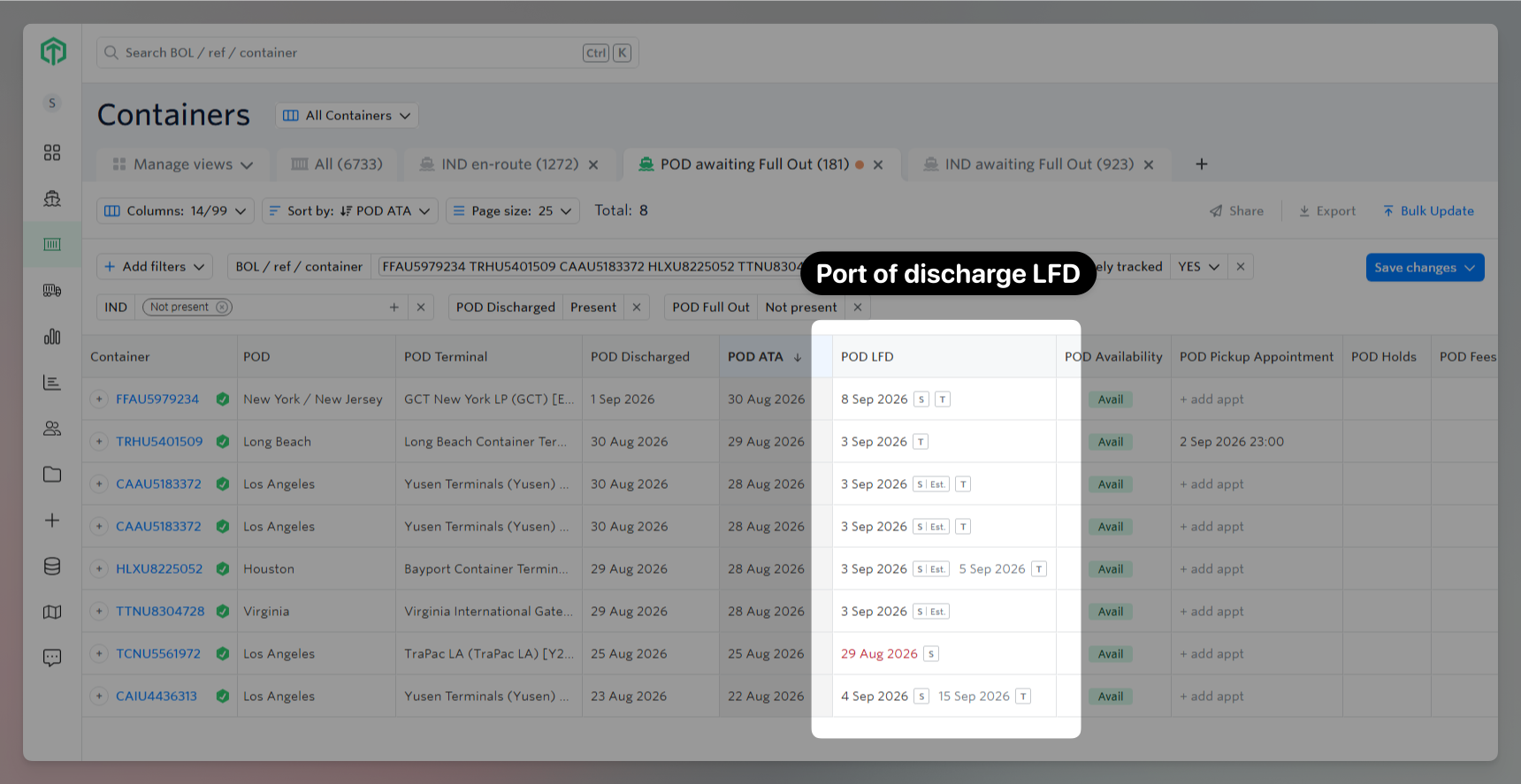
When a shipping line has not published a last free day for your container, Terminal49 can show an estimate of it, worked out from the line's published tariff and the terminal's working calendar.
An estimate is always marked Est. wherever it appears, so you can tell it apart from a date the carrier actually published.
What it is not
It is not a commitment. It is our calculation from published information, not a date the carrier or terminal has given you.
An estimate never overrides a real date. The moment the shipping line publishes a last free day, the published date replaces the estimate.
It reflects standard tariffs only. If you have negotiated free time with a carrier, the estimate will not know about it and will usually read earlier than your actual deadline.
How the date is worked out
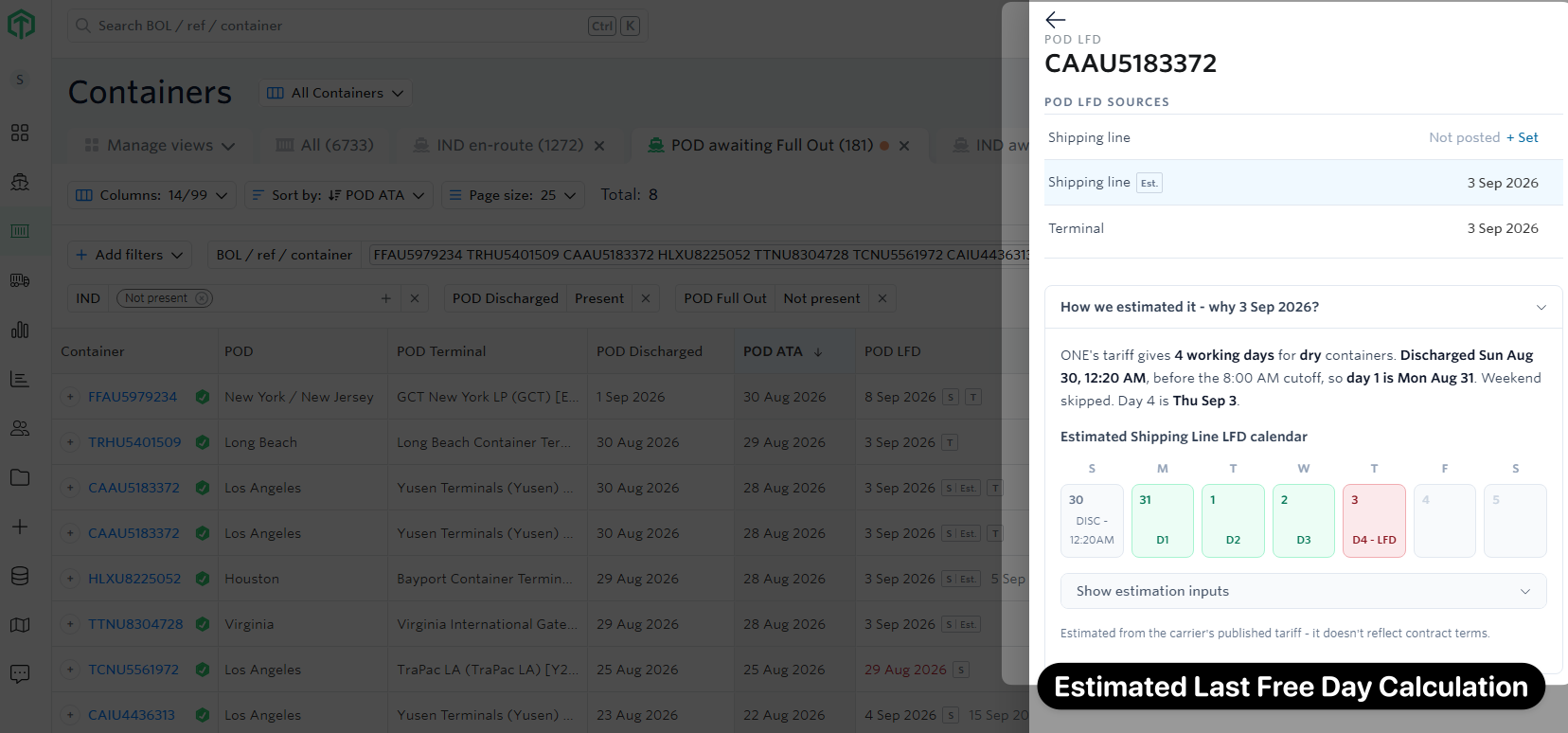
The clock starts when your container is discharged at the port of discharge. Each carrier's tariff also names a cut-off hour: a container discharged after that hour starts counting the following day.
The number of free days comes from the carrier's published tariff for that port, container type and time period. We keep a dated set of rules, so a container is measured against the tariff that was in force at the time, not today's.
The days are counted on the terminal's calendar. Most tariffs count working days, so days the terminal is closed do not consume free time: weekends, public holidays, and any specific closures we hold for that terminal. Some tariffs count calendar days instead, and then every day counts.
The last counted free day is the estimated LFD.
Where the inputs come from
Tariffs are read from each carrier's own published demurrage tariff documents, and refreshed when they publish a new one.
Terminal calendars, meaning regular opening days and holiday closures, are held per terminal.
Current coverage
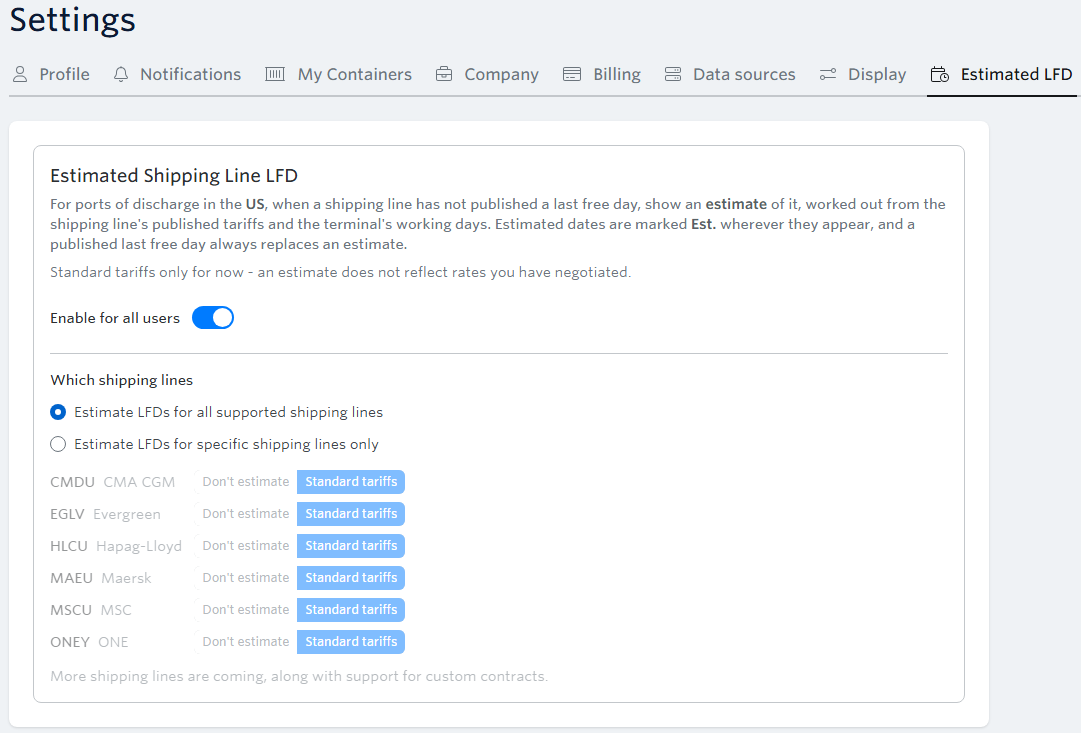
Six shipping lines: CMA CGM, Evergreen, Hapag-Lloyd, Maersk, MSC, and Ocean Network Express.
US ports of discharge only.
The port deadline only. Inland (rail destination) last free days are not estimated.
Seeing why a date reads the way it does
Click an estimated date to open the Estimated Shipping Line LFD calendar. It shows the discharge that started the clock, every day counted, and every day skipped with the reason: weekend, holiday, or a terminal closure.
Setting your own date
If you know the real deadline, because the terminal told you or your contract gives you more free time than the standard tariff does, you can enter it yourself. In the side panel, click + Set on the source you want to correct and enter the date.
Your date is labelled Manual and takes precedence: it replaces the estimate for that source, and a later posting from the shipping line will not overwrite it. Clear it and the carrier's own dates take over again.
After you save, we ask one question, “Saved. Where did this come from?”, with four answers: Terminal told us, Carrier told us, Our contract terms, or Something else. It is optional; you can dismiss it. Answering helps us see which of our sources needs work, and where a tariff rule may be wrong.
Turning it on
Settings → Estimated LFD. It is off until someone at your company turns it on, and the setting applies to everyone on the account. You can enable it for all supported carriers, or pick specific ones.
If you have any questions or feedback about estimated last free days, the fastest way to get assistance is through our in-app chat or emailing support@terminal49.com.